

 0
0
 0
0
Selling property can feel like winning the lottery until cash house buyers and capital gains tax considerations come into play, with HMRC ready to claim a chunk of your profit. Whether you’re cashing out on that investment flat to fund your dream business or downsizing to embrace minimalist living, understanding how to legally reduce what HMRC takes is absolutely essential.
The good news? You’ve got more control than you think. Smart property sellers know that with the right strategies, you can keep significantly more of your hard-earned gains. We’re talking about legitimate, HMRC-approved tactics that savvy investors use every single day to protect their wealth.
Think of capital gains tax planning like meal prepping for your finances. A little strategic effort upfront saves you thousands later. The difference between someone who blindly sells and someone who plans ahead can literally be tens of thousands of pounds. That’s money that could go toward your next property, a career pivot, or finally booking that wellness retreat you’ve been dreaming about since your mental health took a hit during lockdown.
Here’s the reality: most people overpay simply because they don’t know the rules. The UK tax system actually offers several relief options and strategic moves specifically designed for property sellers. From understanding your annual exemption to timing your sale strategically, these aren’t shady loopholes. They’re your rights as a taxpayer.
This guide breaks down the exact tactics you need to minimize your tax bill without the boring jargon or complex calculations that make your eyes glaze over. Just straightforward, actionable advice you can implement right now.

What You’re Actually Paying (And Why It Matters)
Here’s the thing about capital gains tax: it sounds scarier than it actually is, but it can still take a serious chunk out of your property sale proceeds if you’re not paying attention. Think of it as the government’s cut when you make a profit selling property. You bought your flat for £250,000, sold it for £350,000? That £100,000 difference is your gain, and HMRC wants their share.
The actual percentages depend on your total income for the year. If you’re a basic-rate taxpayer (earning up to £50,270 annually), you’ll pay 18% on property gains. Cross into the higher or additional-rate bracket? That jumps to 24%. It’s worth checking the official 2026/27 CGT rates and allowances as these figures can shift with each budget.
| Tax Band | Annual Income | CGT Rate on Property |
|---|---|---|
| Basic Rate | Up to £50,270 | 18% |
| Higher Rate | £50,271 to £125,140 | 24% |
| Additional Rate | Over £125,140 | 24% |
Before you panic about those percentages, there’s good news: everyone gets an annual tax-free allowance. For 2026, that’s £3,000. Sell your property and make a £45,000 gain? You only pay tax on £42,000 of it. Not huge, but every bit counts when you’re planning your next investment or saving for that boutique studio space you’ve been eyeing.
Here’s why this matters beyond just numbers on a tax form. Property gains can push you into a higher tax bracket for that year, even if your regular salary wouldn’t. Made £60,000 from your job and £40,000 from selling your buy-to-let? Your combined income for tax purposes is now £100,000, and you’re paying the higher rate on most of that property gain. This is exactly why timing and strategy matter so much. The difference between an 18% and 24% rate on a £50,000 gain is £3,000, money that could fund three months of your fitness coaching certification or cover that Paris Fashion Week trip you’ve been planning.
Understanding these basics gives you the power to make informed decisions rather than just hoping for the best when sale day arrives.
Your Main Home = Your Safety Net
Here’s the thing about your main home: it’s probably the smartest tax shelter you’ll ever have, and you didn’t even need to do anything special to qualify for it. If you’ve been living in the property you’re selling as your primary residence, you could walk away from the sale completely tax-free. Yes, really.
Private Residence Relief for main homes is the official name, but think of it as your financial safety net. When you sell a property that’s been your main home throughout your ownership, you typically don’t owe any capital gains tax on the profit. That three-bedroom flat in Shoreditch you’ve called home base while building your activewear brand? The townhouse in Manchester where you crash between London fashion weeks? If it’s genuinely been your primary residence, you’re covered.
The key word is primary. HMRC looks at where you actually live, not just where you claim to live. If you’ve got mail coming there, you’re registered to vote from that address, and it’s where you spend most of your time when you’re not travelling for work, you’re solid. For those of you juggling multiple properties or splitting time between cities, only one place can be your main residence at any given time.
Here’s where it gets even better: even if you moved out before selling, you still get relief for the entire period you lived there, plus an automatic extra nine months of coverage. Bought your flat in 2023, lived there until early 2026, then decided to sell later this year? You’re still fully protected, even though you weren’t physically there for those final months. That breathing room means you can take your time finding the right buyer without watching potential tax bills pile up.

The Side Hustle Property Owner’s Playbook
Spread Your Gains (and Lower Your Bill)
Here’s the tax trick that sounds too simple to be true but actually works: if you’re sitting on a hefty property gain, you don’t have to sell everything at once. Split the sale across two tax years, and you could slice your bill significantly by using two annual tax-free allowances instead of one.
The 2026 annual exempt amount stands at £3,000 per person. Sell a property in March 2027 with a £50,000 gain, and you’ll pay tax on £47,000 of that. But exchange contracts in March and complete in April (straddling the 5th April tax year boundary), and you’ve just activated two separate £3,000 allowances, one for the 2026/27 tax year and another for 2027/28. That’s £6,000 of tax-free gains instead of £3,000, which translates to real money saved.
Strategic timing around the tax year isn’t gaming the system, it’s using the rules exactly as they’re designed, and it’s one of the most underutilized tools in property tax planning.
This approach works particularly well if you’re selling a buy-to-let that’s been your side income while building your fitness brand or fashion business. The paperwork gets a bit more complex with completion dates spanning tax years, so work with a solicitor who understands the timing implications. You’ll need to report each portion correctly, but the potential savings make the extra admin completely worthwhile. Just remember: the date that matters for CGT is completion, not when you accept an offer.
Partner Up for Tax Perks
Here’s the thing about owning property with your partner: you’re not just building a life together, you’re potentially doubling your tax-free allowance. If you’re married or in a civil partnership, you can transfer assets between you without triggering capital gains tax. That’s huge when you’re planning to sell.
Let’s say you bought that converted warehouse loft together. When it’s time to sell, you each get your own annual CGT allowance, currently £3,000 per person in 2026. Suddenly you’ve got £6,000 of gains that are completely tax-free instead of just £3,000. The maths is simple, but the savings add up fast.
Here’s where it gets strategic: if one of you is a basic-rate taxpayer and the other pays the higher rate, you can shift ownership before selling so more of the property is held by the lower earner. They’ll pay 18% on residential property gains instead of 24%. You’re literally choosing which tax bracket applies to your sale.
The transfer needs to happen as a genuine gift though, not a last-minute tax dodge right before completion. HMRC isn’t buying that. Think of this as part of your broader wealth strategy, the same planning mindset you bring to your business ventures. Split ownership thoughtfully from the start, keep clean records of who owns what percentage, and you’ve built in tax efficiency before you even list the property.

Deductions That Actually Work
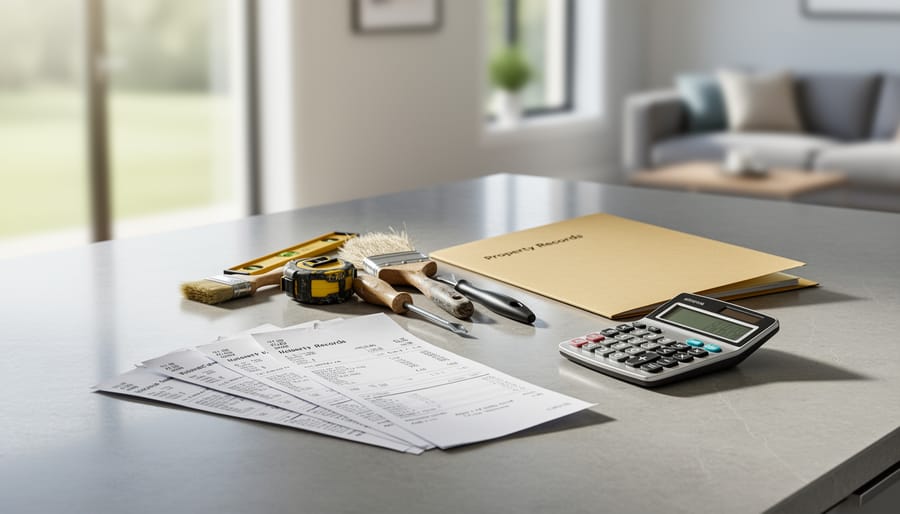
Here’s the thing about reducing your capital gains tax bill: you’ve probably already paid for a bunch of deductions without even knowing it. Every invoice from your solicitor, every receipt from that bathroom renovation, every estate agent fee, they’re not just proof you spent money, they’re ammunition against HMRC’s tax calculations.
Let’s talk about what you can actually claim. When HMRC calculates your capital gain, they let you deduct the costs of buying and selling the property from your profit. That means solicitor fees, estate agent commissions, and surveyor costs all come off your taxable amount. If you paid stamp duty when you bought the place, that’s deductible too. Even the cost of advertising your property for sale counts.
But here’s where it gets interesting for those of us who’ve poured love (and cash) into our properties. Substantial improvements, not repairs, but actual upgrades that increased the property’s value, can be deducted from your gain. That kitchen extension you saved for? Deductible. Converting the loft into a home gym? Counts. Installing central heating where there wasn’t any before? Absolutely.
The difference between repairs and improvements trips people up constantly. Fixing a broken window isn’t deductible because you’re just maintaining what was already there. But replacing all the single-glazed windows with double-glazing? That’s an enhancement, and HMRC allows it.
People often miss these legitimate deductions:
- Professional fees for valuations needed to calculate your gain
- Costs of defending your property title
- Planning permission fees for extensions or conversions
- Architect and structural engineer fees
- Loan arrangement fees specifically for property improvements
Now here’s the reality check: none of this matters if you can’t prove it. HMRC won’t take your word for it. You need receipts, invoices, bank statements, proper documentation showing what you spent and when. Start a dedicated folder (digital works perfectly) the moment you’re considering selling. Photograph every invoice, save every email confirmation, keep every contractor’s quote and final bill.
If you’ve owned the property for years and didn’t keep records? Dig through old emails, contact previous solicitors for copies of completion statements, check your bank for transaction histories. It’s tedious work, but finding a forgotten £15,000 renovation invoice could save you thousands in tax. That’s money staying in your pocket, funding your next adventure instead of disappearing into the tax system.
The Renovation Game: When Upgrades Pay Off Twice
Here’s the truth about those gorgeous renovations you’ve been drooling over on Instagram: they can actually work double duty for your bank account. When you sell your property, the money you spent transforming that dated kitchen or adding a sleek home gym doesn’t just boost your selling price, it can seriously slash your capital gains tax bill too.
HMRC lets you deduct “enhancement expenditure” from your taxable gain, which is fancy speak for improvements that genuinely add value to your property. We’re talking structural changes, not just a fresh coat of paint. Think kitchen extensions, loft conversions, or that dedicated wellness space where you installed professional-grade equipment for indoor cycling sessions. Even landscaping that transforms your outdoor space can count.
The catch? You need receipts. Every invoice, every contractor’s bill, every material purchase, keep it all. Your accountant will love you for it, and HMRC requires proof. Those renovation costs get subtracted from your property’s gain before tax is calculated, which means a smaller tax bill when you sell.
Here’s a smart move: track everything from day one. Create a digital folder with photos of the space before and after, plus all financial documentation. Even if you’re not planning to sell immediately, you’re building a tax-saving portfolio for the future. That £20,000 kitchen renovation that adds £35,000 to your property value? You’re winning twice, higher sale price and lower tax liability. Now that’s what we call a power move.
Timing Is Everything (Literally)
The calendar might seem like just another thing to juggle alongside your training schedule and work commitments, but when it comes to selling property, timing your sale can literally save you thousands. The UK tax year runs from April 6th to April 5th, and understanding this timeline is as crucial as planning your competition prep or fashion week schedule.
If you’re sitting on a property gain that’s going to push you over the annual exempt amount (currently £3,000 for the 2026/27 tax year), consider whether waiting a few weeks or months to complete the sale in the new tax year makes sense. You get a fresh allowance every April 6th, so a property sale completed in early April versus late April could mean using two years of allowances instead of one. That’s potentially £6,000 of tax-free gains instead of £3,000.
Your personal income matters too. If you’re expecting a lower income year (maybe you’re taking time off to launch that activewear line or focus on staying fit during a career transition), selling during that period could keep you in a lower capital gains tax bracket. Higher rate taxpayers pay 24% on residential property gains, while basic rate taxpayers pay 18%. The difference on a £50,000 gain is £3,000 in your pocket versus the taxman’s.
Think about your overall financial goals too. Are you selling to fund a business venture, relocate for better opportunities, or invest in your next property? Align your sale timing with those bigger plans. Rushing a sale in December when the market’s quiet might cost you more in reduced sale price than you’d save in tax planning. Strategic patience pays off when you’re building long-term wealth, not just chasing quick wins.
Your Action Plan: Making It Happen
Ready to turn all this tax knowledge into actual savings? Here’s your game plan for making these strategies work in real life.
First things first: get your financial house in order now, not when you’re ready to sell. Think of it like maintaining save your wardrobe prevention beats scrambling later. Create a dedicated folder (digital or physical, whatever works for you) for every property-related receipt, invoice, and document from day one.
Here’s your step-by-step action plan:
- Gather all purchase documents including your original contracts, solicitor fees, and stamp duty receipts.
- Collect proof of improvements, invoices for that kitchen renovation, bathroom upgrade, or structural work that added real value.
- Document your residence history if you’ve lived in the property, including dates you moved in and out.
- Calculate your preliminary gain using HMRC’s online tools to understand what you might owe.
- Book a consultation with a qualified accountant who specializes in property taxation at least three months before selling.
- Review your timeline and consider whether splitting the sale across tax years makes financial sense.
Your accountant becomes your financial personal trainer here, they’ll spot opportunities you might miss and ensure you’re claiming every legitimate deduction. Just like you wouldn’t wear activewear to a board meeting, don’t try to navigate complex tax laws without professional backup.
Set calendar reminders for key dates, especially the 60-day reporting deadline after completion. Missing this can trigger penalties that wipe out the money you’ve saved through smart planning.
Keep everything organized and accessible. When you can produce documentation instantly, you’ll breeze through the reporting process and protect yourself if HMRC ever asks questions. This preparation pays dividends in peace of mind and actual pounds saved.
You’ve got the knowledge now, time to put it into action. Every pound you save on capital gains tax is a pound that can fund your next big move, whether that’s launching your activewear line, investing in that boutique fitness studio, or booking the fashion week trip you’ve been dreaming about.
The beauty of understanding property tax isn’t just about keeping more money in your pocket (though let’s be real, that’s a massive win). It’s about taking control of your financial future so you can live the life you’re building. The same energy you bring to perfecting your squat form or curating your capsule wardrobe? That’s exactly what you need to bring to your financial strategy.
Start simple. Gather your receipts and renovation records today. Check your tax year calendar. If you’re feeling overwhelmed, book that meeting with an accountant who gets property tax, it’s an investment that pays for itself. You wouldn’t skip leg day or wear last season’s trends, so don’t skip the financial planning that supports everything else you’re working toward.
Your property isn’t just bricks and mortar. It’s a stepping stone to your bigger vision. Whether you’re selling to upgrade, pivot, or fund your next venture, making smart tax moves means you keep more of what you’ve earned. And honestly? You’ve worked too hard to hand over a single unnecessary penny.
Now go make those smart money moves happen.

0 %

0 %

0 %

0 %

0 %

0 %





Average Rating