 0
0
 0
0
A healthy everyday fitness lifestyle isn’t about punishing gym sessions or restrictive meal plans. It’s about weaving movement, nourishment, and energy into the fabric of your daily routine so seamlessly that wellness becomes second nature, not a chore. For fashion-forward women navigating busy schedgets, tight budgets, and the constant juggle of work, social life, and self-care, the secret lies in micro-habits: ten-minute morning yoga flows, walking meetings, kitchen counter stretches while your coffee brews. These small, consistent actions compound over time, transforming your relationship with fitness from obligation to lifestyle.
The truth? You don’t need a gym membership or an overhaul of your entire life to feel strong, energized, and confident in 2026. What you do need is a mindset shift. Fitness should complement the life you’re already living, fitting into your apartment, your wardrobe, and your schedule without friction. Think about optimizing your space with resistance bands tucked into a stylish basket, activewear that transitions from your morning run to brunch, and a supportive community that keeps you motivated without pressure.
This approach honors where you are right now while gently nudging you toward where you want be. It’s about creating a home environment that supports movement, whether that means clearing clutter for better airflow with help from Dryer Vent Clean Experts for a fresher space or designating a corner for your workout essentials.
Your Home Layout Is Already a Fitness Blueprint
Kitchen Wellness: Where Nutrition Meets Movement
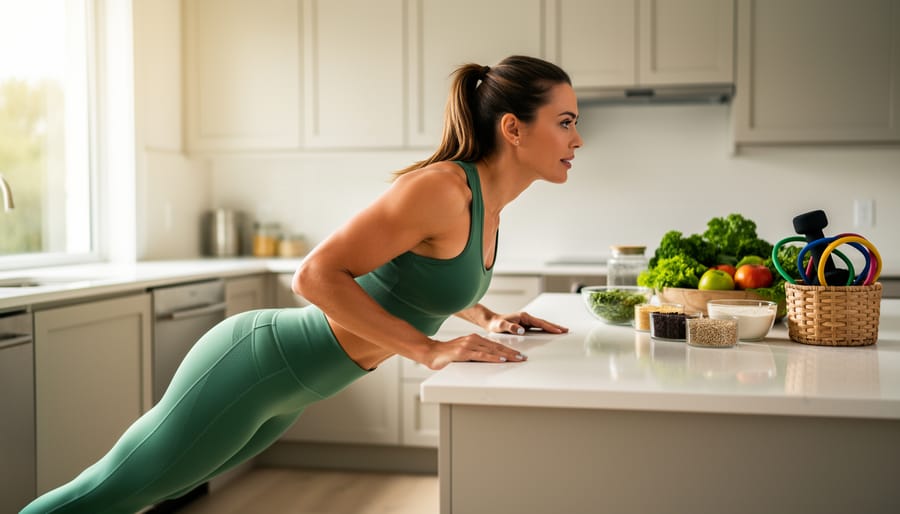
Your kitchen isn’t just where you fuel your body, it’s an underrated movement zone that keeps you active multiple times daily. Standing while chopping vegetables, stirring sauces, or washing dishes naturally adds low-intensity activity that accumulates throughout the week. Research shows that standing increases energy expenditure compared to sitting, making meal prep a surprisingly effective way to boost daily calorie burn without feeling like exercise.
Smart kitchen organization amplifies this effect. Store frequently used spices on higher shelves so you’re reaching and stretching. Position your cutting board at counter height rather than sitting to prep, you’ll engage your core and legs naturally. Keep a set of push-up bars near the kitchen entrance for quick sets while waiting for water to boil or the oven to preheat. These micro-movements transform cooking from a sedentary task into an active ritual that supports both nutrition and fitness goals simultaneously.
Living Spaces That Encourage Active Recovery
Your living room isn’t just for Netflix binges, it’s prime real estate for the kind of gentle movement that actually helps your body recover from intense workouts and daily stress. The best part? You don’t need to transform your space into a yoga studio to make it work.
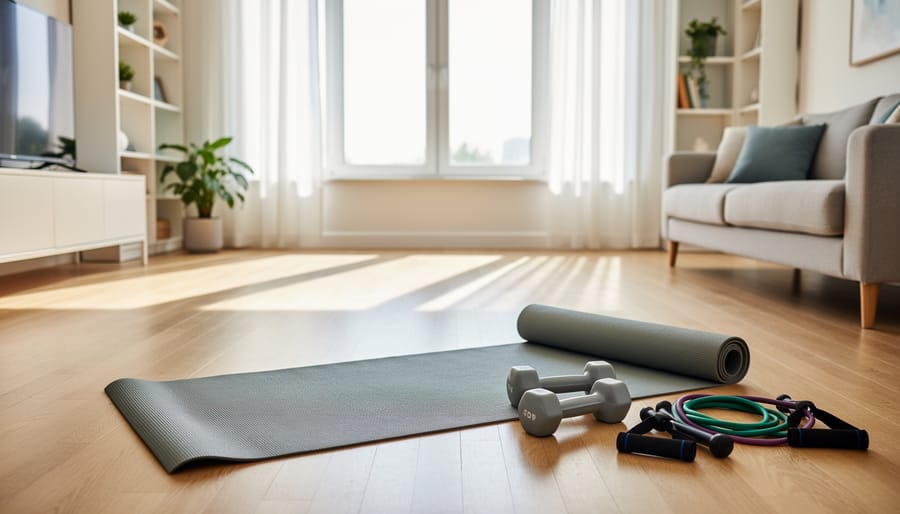
Start by identifying one corner or area where you can easily roll out a mat without moving furniture. This becomes your go-to spot for evening stretches or morning sun salutations. Keep a folded yoga mat or blanket nearby so setup takes five seconds, not five minutes. The lower the barrier, the more you’ll actually use it.
Your couch is secretly a prop for active recovery. Use the armrest for supported hip flexor stretches while watching TV, or slide down to the floor for seated forward folds during commercial breaks. That coffee table? Perfect height for elevated plank holds or tricep dips when you need a quick movement snack between episodes.
Layer a plush rug in your relaxation zone to make floor time genuinely appealing. Nobody wants to stretch on cold hardwood, but a soft surface naturally invites you to sit, roll, and move through gentle mobility work. Add a couple of throw pillows that double as bolsters for restorative poses, and suddenly your living space serves both recovery and comfort without looking like a gym annex.
Micro-Workouts: The Secret to Consistent Movement
Morning Routine Activators
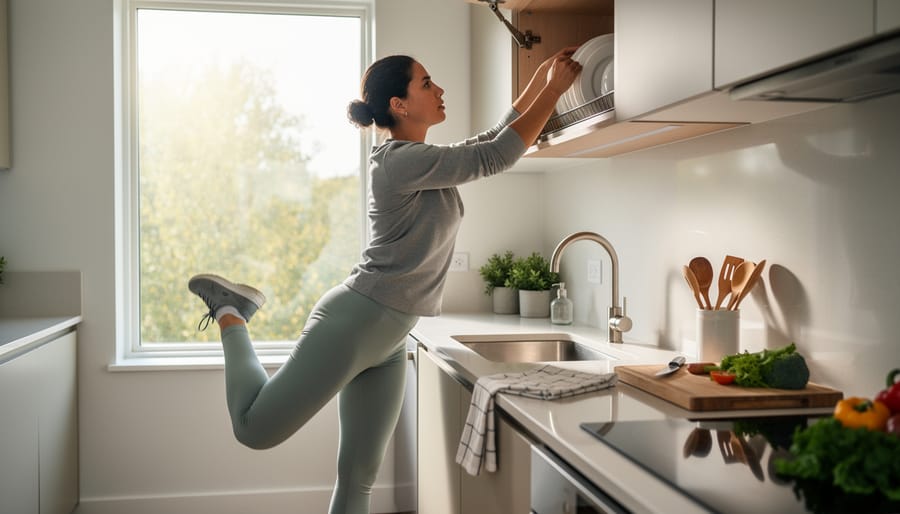
Your morning routine already has built-in movement opportunities, you just need to notice them. While your coffee brews, do calf raises at the counter: rise up on your toes for three seconds, lower slowly, repeat fifteen times. This simple move activates your lower legs and improves circulation after sleep. As you reach for mugs or pantry items, add overhead stretches that wake up your shoulders and spine.
Getting dressed offers perfect moments for balance work. Stand on one leg while putting on pants or socks, switching sides with each item. This challenges your stabilizer muscles and improves coordination without adding time to your routine. Between outfit changes, drop into three slow squats, they’ll fire up your glutes and get blood flowing to major muscle groups.
Breakfast prep transforms into dynamic stretching time. Lunge gently from side to side while waiting for toast or eggs, opening up your hips. Do arm circles while the kettle boils. These micro-movements accumulate serious benefits over weeks and months, prepping your body for everything from indoor cycling sessions to long workdays at your desk. The key is consistency, not intensity, five minutes of integrated movement every morning beats skipping scheduled workouts because they feel like too much effort.
Work-From-Home Movement Breaks
Your desk chair isn’t the enemy, it’s the lack of movement around it. Research shows that taking a five-minute stroll every half hour significantly counteracts the metabolic effects of prolonged sitting, which means your break between meetings matters more than you think.
Set a timer and treat movement breaks like non-negotiable calendar blocks. Stand up during video calls, do calf raises while your email loads, or knock out ten squats between tasks. Desk-friendly stretches work best when they’re already woven into your workflow, hip flexor stretches while reading documents, shoulder rolls during phone calls, seated spinal twists while reviewing spreadsheets.
The key is choosing movements that don’t mess up your outfit or leave you sweaty. Wall push-ups, standing leg lifts, and doorway chest stretches keep you comfortable enough to jump straight back into work. Keep resistance bands looped over your desk chair for quick arm exercises during longer calls. Your 3 PM slump hits differently when you’ve been moving every thirty minutes instead of white-knuckling through eight straight hours in the same position.
Evening Wind-Down Mobility
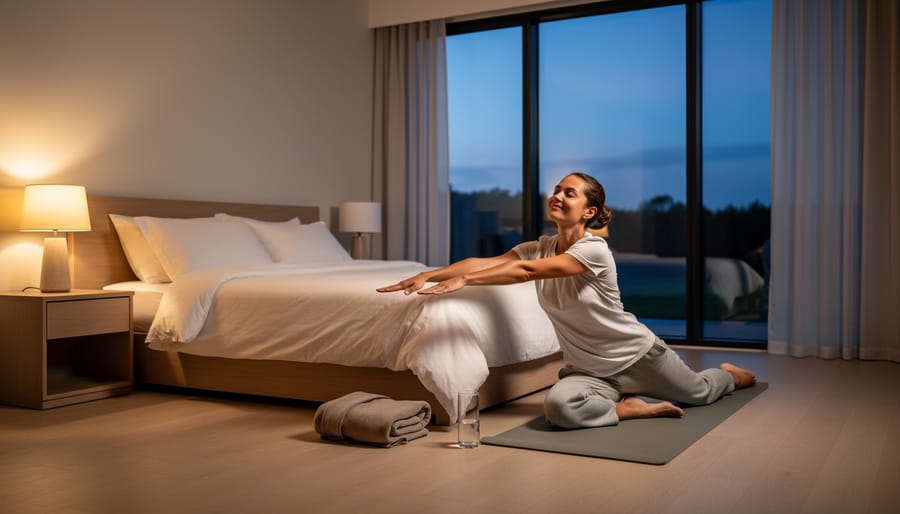
Your evening routine already has natural moments for gentle movement that signal to your body it’s time to transition from day to night. While brushing your teeth, try slow calf raises or hip circles, these subtle movements release tension without revving up your energy. Before bed, spend five minutes on child’s pose or seated forward folds while scrolling through your phone or listening to a podcast. The key is making mobility feel like self-care rather than exercise. Focus on movements that feel good rather than challenging: neck rolls while your tea steeps, gentle spinal twists on the couch, or legs-up-the-wall pose while watching your favorite show. These practices lower cortisol levels and improve circulation, creating the physical conditions your body needs for deep, restorative sleep.
The Capsule Fitness Wardrobe That Lives in Your Closet
Invest vs. Refresh: What’s Worth the Splurge
Splurge on the foundational pieces that take daily abuse, high-quality leggings with compression technology that maintains shape after dozens of washes, and supportive sports bras with adjustable straps that actually last beyond six months. These workhorses justify the investment because replacing cheap versions every few months costs more than buying right once. Look for fabrics with four-way stretch and reinforced seams at stress points, especially if you’re doing floor work or anything involving friction against your mat.
Save your budget flexibility for trend pieces like oversized sweatshirts, cropped tanks, and fun accessories that refresh your rotation without breaking the bank. Color trends shift fast, that viral lavender shade or neon accent won’t stay current forever, so grab these updates from affordable retailers. The same logic applies to experimental categories like CBD activewear or recovery socks: try the budget version first to see if the benefits actually matter to your routine before upgrading. Your money goes furthest when premium durability meets your daily habits, while trendy refreshes keep your aesthetic current without commitment.
From Couch to Coffee Run: Pieces That Do Both
The key to activewear that transitions seamlessly from home workouts to errands is choosing pieces that look intentional rather than accidental. Start with high-waisted leggings in darker colors or subtle patterns, they create a polished silhouette that reads as “outfit choice” rather than “forgot to change.” Pair them with a fitted crop top or bodysuit, then layer an oversized button-down shirt or denim jacket. This instantly elevates the look from gym-only to street-ready while keeping you comfortable for spontaneous movement throughout your day.
Footwear makes or breaks the transition. Swap your running shoes for sleek trainers in neutral tones, white, black, or tan, that complement rather than clash with your outfit. Chunky-soled sneakers bridge the gap between athletic and casual perfectly. Accessorize with a structured crossbody bag instead of a gym backpack, and add simple gold jewelry or a baseball cap for polish. The goal is creating a look where someone can’t immediately tell if you’re heading to Pilates or meeting friends for coffee.
Keep a few styling tricks in your rotation: knot your oversized shirt at the waist, roll your leggings at the ankle to show off your sneakers, or add a belt bag for a utilitarian-chic vibe. These small details transform activewear into actual outfits. And if you’re refueling post-workout with a whey protein shake, do it in style, your coffee run outfit should make you feel confident, not caught mid-transition.
Creating a Home Environment That Supports Your Goals
Strategic Equipment Placement
Resistance bands rolled in a decorative basket beside your coffee table become a quick grab during commercial breaks. Your yoga mat leaning against the bedroom wall transforms morning stretches from intention to action, no rummaging through closets required.
The placement strategy that actually works? Put equipment where you naturally pause throughout your day. A set of light dumbbells on a living room bookshelf means spontaneous arm curls while scrolling your phone. Slide resistance bands into the basket holding throw blankets, they’re there when you’re already on the floor stretching.
Skip the dedicated “workout corner” that screams gym. Instead, integrate pieces that complement your space. Stackable weights double as modern bookends. Foam rollers in sleek fabrics sit openly near your couch without looking out of place.
The visibility test matters: if you have to move three things to access your equipment, you won’t use it. Place your most-used pieces within arm’s reach of spots where you already spend time relaxing or transitioning between activities. Your consistency depends on convenience, not willpower.
Nutrition Prep Zones
Your kitchen setup directly determines whether healthy eating becomes your default or a daily negotiation. Start by claiming prime real estate, eye-level shelves and counter space, for your nutritious staples. Glass containers filled with prepped vegetables, quinoa, and overnight oats should occupy the first spots you see when you open the fridge, not hiding behind leftover takeout. Keep a designated “grab zone” stocked with washed fruit, portioned nuts, and protein-rich snacks at the front of your pantry where convenience meets nutrition.
Create a prep station near your sink with a cutting board, good knife, and your favorite podcast or playlist queued up, making meal prep feel like self-care rather than a chore supports both physical wellness and mental health. Batch-cook proteins and chop vegetables on Sunday evenings, storing them in clear containers so assembling meals becomes a five-minute assembly line instead of a cooking project. When healthy options require zero extra thought or effort, they become your actual lifestyle rather than aspirational goals you’ll get to eventually.
The Social Side of Home Fitness
Making Movement a Household Habit
Living alone or not, turning fitness into a shared household vibe makes consistency way easier. When everyone’s on board, movement stops feeling like your solo responsibility and starts being just what you do together.
Start by normalizing casual activity instead of formal workouts. Suggest a walk after dinner rather than immediately settling onto the couch. Queue up a 10-minute dance party while tackling dishes. Challenge your roommate to see who can hold a plank longer during commercial breaks. These low-pressure moments remove the intimidation factor and make movement feel social rather than serious.
Share your goals without making them everyone else’s problem. When your partner knows you’re trying to get in morning stretches, they can support that by handling breakfast or just not scheduling early conversations. If your household understands why you’ve cleared space in the living room, they’re less likely to pile stuff there.
Create shared accountability that feels supportive, not judgmental. A group chat where everyone drops their daily movement, even if it’s just “took the stairs today”, builds collective momentum. You’re not policing each other; you’re celebrating that fitness exists in your home culture, whatever form it takes for each person.
Digital Communities That Actually Motivate
Finding your fitness tribe online transforms solo home workouts into a connected experience. The right digital communities provide accountability without judgment, think supportive group chats celebrating rest days as much as PRs, not toxic fitness culture pushing unsustainable standards.
Start by identifying what actually keeps you showing up. If polished perfection feels alienating, seek creators who normalize messy hair and real-life interruptions. Follow hashtags that reflect your specific reality: #WorkFromHomeWorkouts, #ApartmentFitness, or #5AMClub depending on your schedule constraints.
Engage actively rather than passively scrolling. Comment on posts, share your progress (even the mundane stuff), and join challenges that match your current capacity. The best communities celebrate consistency over intensity, recognize that life happens, and prove you’re never working out alone, even when you’re literally alone in your living room.
The truth is, your healthiest life isn’t waiting for you at some expensive gym or behind a perfectly curated routine. It’s already happening in your kitchen while you’re meal prepping, in your living room during commercial breaks, in those morning stretches before your coffee kicks in. When fitness stops being something you schedule and starts being something you just do, that’s when everything clicks.
You don’t need to overhaul your entire existence or commit to punishing workout regimens that leave you exhausted. The real transformation comes from those small, consistent moments, the five-minute mobility session before bed, the desk stretches between emails, the dance party while folding laundry. These aren’t compromises or shortcuts. They’re actually smarter than forcing yourself through workouts you dread, because they’re the habits you’ll still be doing five years from now.
Your home isn’t just where you live. It’s the environment that shapes every choice you make, every movement you take. When you set it up to support you, equipment where you’ll actually use it, activewear that makes you feel good enough to wear all day, spaces that invite movement instead of guilt, you’re not just getting fit. You’re building a lifestyle that finally feels like yours.
Stop waiting for the perfect moment to start. You’re already home. That’s exactly where you need to be.


Average Rating